
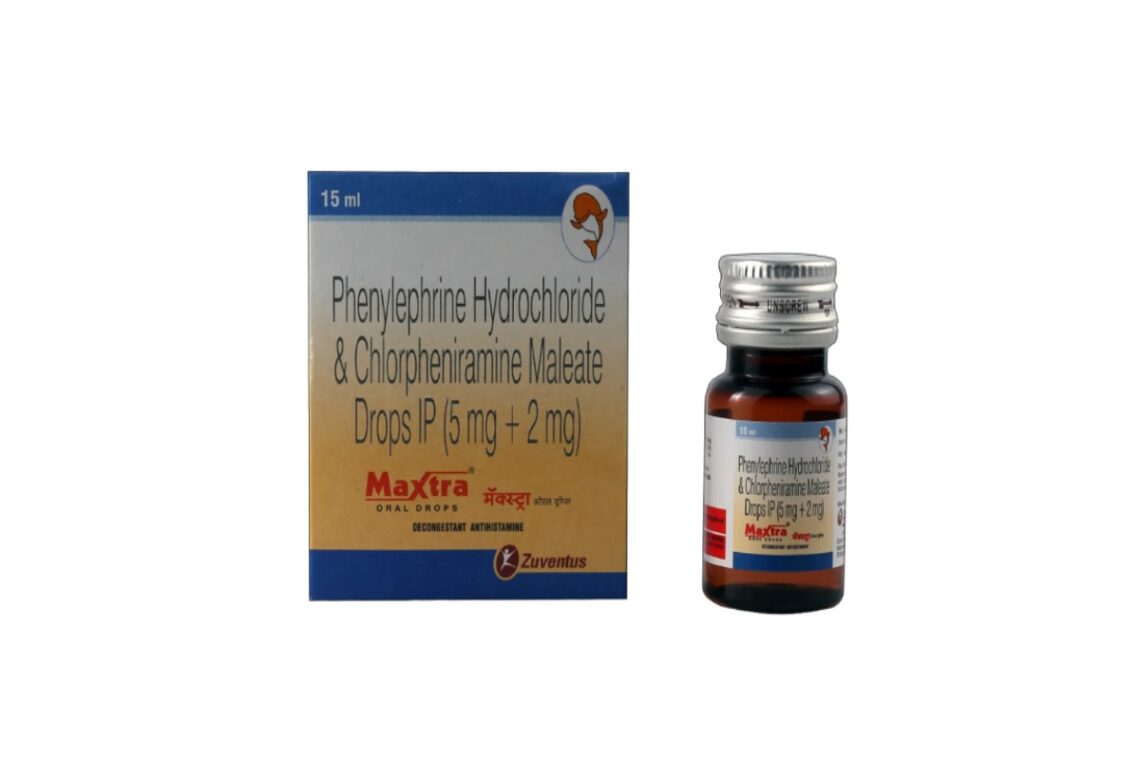
When parents or caregivers search for “Maxtra drops dose per kg,” they are usually looking for one thing: safe, precise dosing for infants and young children. But most online answers oversimplify dosage or ignore the pharmacological nuance behind it.
Maxtra Oral Drops is a combination of Chlorpheniramine and Phenylephrine. This medicine is used to treat the signs of common cold and allergies, such as a runny nose, itching, cough, nasal congestion, and watery eyes, in children. It reduces swelling of the blood vessels in the nasal passages and helps ease a blocked or stuffy nose. It also stops the action of a substance in the body that causes allergic symptoms.
Maxtra Oral Drops are NOT strictly dosed per kg like antibiotics or paracetamol.
This article belongs to Medicines & Treatments
What Are Maxtra Oral Drops?
Maxtra Oral Drops are a combination pediatric cold medicine used for symptomatic relief.
- Common cold
- Allergic rhinitis
- Runny nose
- Sneezing
They typically contain a combination of:
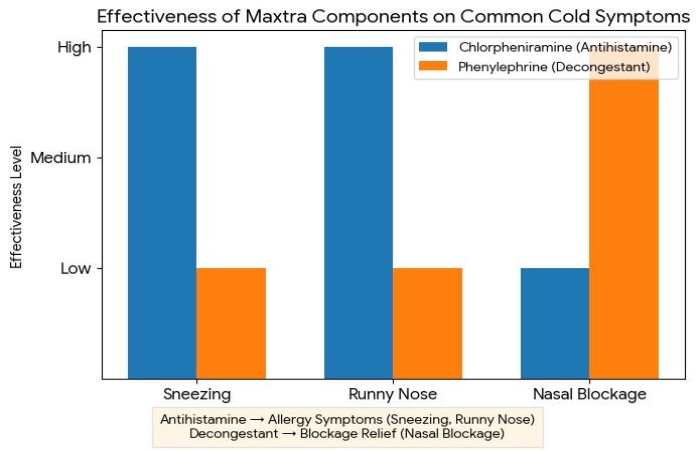
| Component | Type | Function |
| Chlorpheniramine | Antihistamine | Reduces sneezing, runny nose |
| Phenylephrine | Decongestant | Relieves nasal blockage |
These two together help relieve common cold and allergy symptoms in children.
Maxtra Drops Dose Per Kg
Why There Is No Exact Per Kg Formula
| Reason | Explanation |
| Combination drug | Multiple active ingredients in a fixed ratio |
| Safety concerns | Overdose affects the heart & CNS. |
| Age sensitivity | Infants react differently from older children |
Doctors use age-based dosing + clinical judgment, not strict per kg formulas.
Standard Pediatric Dose
| Age | Dose | Frequency |
| < 6 months | Not recommended | — |
| 6–12 months | 0.5 ml | 2–3 times/day |
| 1–2 years | 1 ml | 2–3 times/day |
| 2–6 years | 1–1.5 ml | 2–3 times/day |
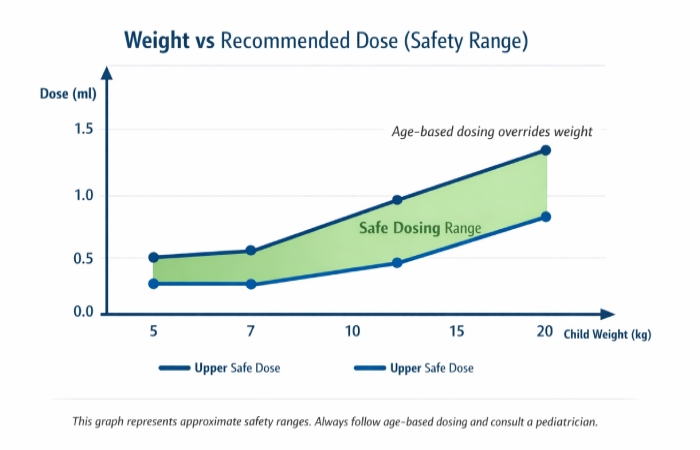
Approximate Weight-Based Interpretation
| Weight | Approx Dose |
| 5–7 kg | ~0.5 ml |
| 8–10 kg | ~0.5–1 ml |
| 10–15 kg | ~1 ml |
| 15–20 kg | ~1–1.5 ml |
This is NOT an official formula—just a clinical approximation.
Uses of Maxtra Oral Drops
Maxtra is mainly used for symptomatic relief, not curing infections.
Primary Uses
| Condition | Benefit |
| Common cold | Reduces congestion & discomfort |
| Allergic rhinitis | Controls sneezing & watery eyes |
| Runny nose | Dries excessive mucus |
| Nasal blockage | Improves breathing |
It helps children feel better by quickly reducing cold symptoms.
Secondary / Off-Label Uses
| Situation | Why Used |
| Night-time congestion | Helps sleep |
| Seasonal allergies | Antihistamine effect |
| Viral upper respiratory infections | Symptom relief |
Price of Maxtra Drops
| Pack Size | Price Range |
| 15 ml bottle | ₹90 – ₹105 |
Typical price: ₹95 approx (may vary by pharmacy).
Where to Buy Maxtra Drops
Online Pharmacies
- Tata 1mg
- PharmEasy
- Apollo Pharmacy
Offline Stores
- Local medical shops
- Hospital pharmacies
Note: A prescription is usually required.
How Maxtra Drops Work
| Ingredient | Action |
| Chlorpheniramine | Blocks histamine → reduces allergy symptoms |
| Phenylephrine | Shrinks nasal blood vessels → clears congestion |
Easier breathing + reduced nasal discharge
Side Effects of Maxtra Oral Drops
Most side effects are mild and temporary.
| Side Effect | Frequency |
| Sleepiness/sedation | Very common |
| Nausea | Common |
| Vomiting | Common |
| Headache | Occasional |
| Diarrhea | Occasional |
Drowsiness is the most frequently reported effect.
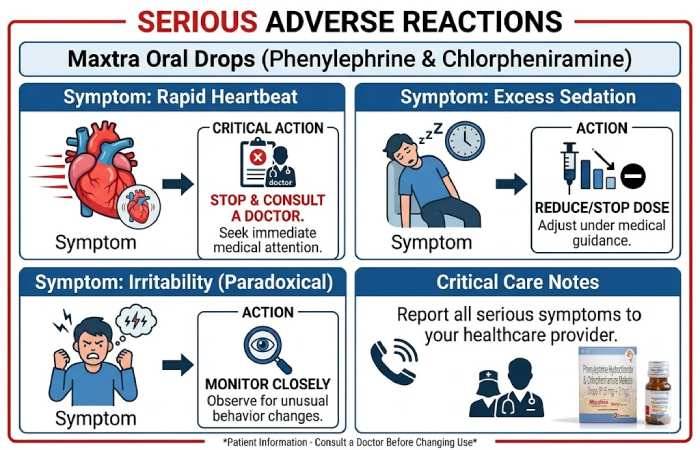
Serious Adverse Reactions
When NOT to Use Maxtra Drops
This is one of the most critical sections often missed.
Contraindications
| Condition | Reason |
| Age < 4 years (as per the government advisory) | Safety concerns |
| Allergy to ingredients | Risk of severe reaction |
| Heart disease | Phenylephrine risk |
| High blood pressure | May worsen the condition |
| Glaucoma | Antihistamine effect |
| Hyperthyroidism | Increased sensitivity |
Use With Caution
| Condition | Why |
| Liver disease | Drug metabolism affected |
| Kidney disease | Clearance issues |
| Concurrent cold meds | Overdose risk |
Common Mistakes Parents Make
| Mistake | Outcome |
| Using the per kg formula blindly | Overdose |
| Giving adult cold syrup | Toxicity |
| Increasing dose for faster relief | Side effects |
| Mixing multiple cold meds | Drug interaction |
Expert Insight – What Pediatricians Actually Do
Doctors prioritize age + symptom severity
Weight is used as a secondary safety check
Lowest effective dose is preferred
This is why you’ll rarely see a strict formula like:
“X drops per kg”
Because Maxtra isn’t designed for that dosing model.
| Factor | Importance |
| Age | Primary |
| Symptom severity | High |
| Weight | Secondary |
| Medical history | Critical |
Pediatricians avoid strict per kg dosing for combination drugs like Maxtra.
Better Alternatives
Depending on symptoms, doctors may recommend:
- Saline nasal drops (safest first-line)
- Single-ingredient antihistamines
- Steam inhalation (for older children)
These often reduce the need for combination drugs.
For readers researching other medicines for respiratory symptoms, Breyna inhaler provides information about a different type of medication used in asthma management. It is not an alternative to Maxtra Drops and has different active ingredients and uses.
Maxtra Vs Other Cold Drops
| Feature | Maxtra Oral Drops | T-Minic Cold Oral Drops | Ascoril Flu Drops |
| Core Ingredients | Chlorpheniramine + Phenylephrine | Chlorpheniramine + Phenylephrine | Chlorpheniramine + Phenylephrine |
| Drug Type | Antihistamine + Decongestant | Antihistamine + Decongestant | Antihistamine + Decongestant |
| Primary Use | Cold, allergy, runny nose | Common cold, nasal blockage | Cold with congestion + cough |
| Age Restriction | Often used cautiously in infants | Not recommended < 4 years | Usually avoided in very young infants |
| Dose Approach | Age-based (not per kg) | Age + weight-based | Age-based |
| Onset of Action | ~30–60 min | Works within minutes | Moderate onset |
| Common Side Effects | Sleepiness, nausea | Sedation, vomiting, headache | Drowsiness, dizziness, vomiting |
| Sedation Level | Moderate | Moderate–High | Moderate |
| Best Use Case | General cold + allergy | Strong nasal congestion relief | Cold + cough combination cases |
| Price (India) | ~₹90–₹105 | ~₹80–₹105 | ~₹90–₹120 |
| Prescription Required | Yes | Yes | Yes |
Additional Health Information
Readers researching different health and wellness topics may also come across information on other products and related subjects. For more information, see Vezgieclaptezims Buy In.
Final Verdict
Maxtra Drops are effective but not simple medications. As a combination drug, their dosing must prioritize safety over mathematical precision rather than relying on strict weight-based calculations. If you’re searching for “Maxtra drops dose per kg,” the key takeaway is that there is no fixed per kg formula. Instead, dosing should follow age-based guidelines, with weight used only as a secondary safety check. Most importantly, doctor guidance is essential—especially for infants, repeated use, or if symptoms persist.
FAQs
- What is the exact dose per kg of Maxtra drops?
There is no standard per kg formula. Doctors use age-based dosing.
- Can I give Maxtra drops to a 6-month-old baby?
Generally not recommended without a doctor advice.
- How quickly does Maxtra work?
Usually within 30–60 minutes, with effects lasting several hours.
- Can Maxtra cause sleepiness?
Yes, drowsiness is the most common side effect.
- Can I give it daily?
Only for short-term use, unless prescribed.
Disclaimer
This content is for educational and informational purposes only and does not replace medical advice. Always consult a qualified pediatrician before giving any medication to a child, especially infants. Dosage may vary based on individual health conditions, and misuse can lead to serious side effects.
Other Medication Information
People researching medicines for different types of health concerns may also encounter information about pain-relief products. For example, Flanax effective pain relief covers a separate medication and should not be considered an alternative to Maxtra Drops. Always consult a healthcare professional before combining medicines or giving a new medicine to a child.