
Burn cream is a medicine used to treat burns. It kills microorganisms that cause infections and reduces inflammatory symptoms such as burning, stinging, and pain. This speeds up the healing process. Burn cream is a combination of two medicines. It is strictly recommended for external use only. Use it in the dosage and duration suggested by your doctor. Apply it only to the affected areas of the skin. In case of accidental contact with eyes or mouth, rinse immediately with plenty of water.
This medication is generally safe, however, it may sometimes cause irritation, burning, and discomfort at the application site. These effects are mild and disappear over time. If they worsen, consult a DR. Burn injuries affect millions globally every year—from kitchen accidents to industrial exposure. Yet despite modern medicine, first aid mistakes remain widespread, often worsening outcomes more than the burn itself.
This article belongs to First Aid & Recovery
What Is Burn Cream & Why Does It Matter
Burn creams are topical formulations used after initial first aid to:
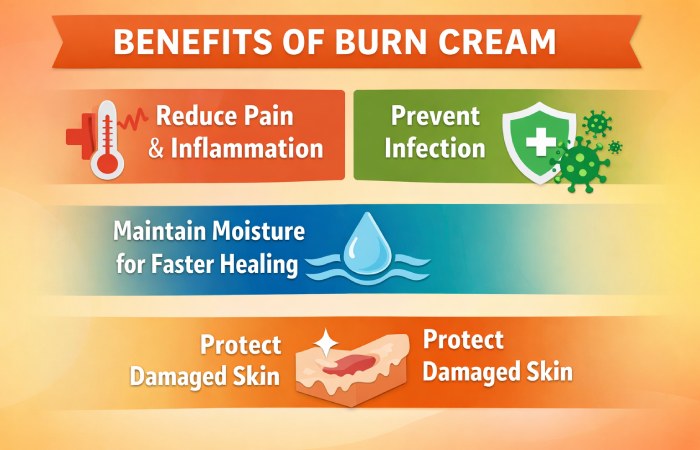
Evidence-based insight: Studies show moist wound environments heal faster than dry exposure, making creams and dressings critical for recovery.
Research from high-authority medical sources, such as the National Center for Biotechnology Information, indicates that aloe vera may reduce healing time for first- and second-degree burns. However, results depend on formulation quality and usage.
Quick First Aid Steps Before Applying Cream
Immediate Burn Response Protocol
| Step | Action | Why It Matters |
| 1 | Cool under running water (10–20 min) | Stops burn progression |
| 2 | Remove tight items (rings, clothes) | Prevents swelling complications |
| 3 | Avoid ice | Ice damages tissue further |
| 4 | Clean gently | Reduces infection risk |
| 5 | Apply burn cream (if mild burn) | Supports healing |
| 6 | Cover with a sterile dressing | Protects wound |
High-authority medical guidance consistently emphasizes that cooling, cleaning, and covering form the foundation of effective burn first aid.
Key Burn Care Action Plan
| Stage | Priority Action | Tools Needed | Outcome |
| Immediate (0–20 min) | Cooling | Running water | Limits tissue damage |
| Early (0–24 hrs) | Pain + infection control | Aloe or mild ointment | Reduces inflammation |
| Short-term (1–7 days) | Moist healing | Dressing + cream | Faster recovery |
| Long-term | Scar prevention | Moisturizers, SPF | Better skin outcome |
The first 20 minutes play a decisive role in determining healing quality, often more than any topical product used later.
Types of Burn Creams & Ingredients
| Type | Key Ingredients | Best For | Pros | Limitations |
| Aloe Vera | Aloe extract | Minor burns | Natural, soothing | Variable evidence |
| Antibiotic Cream | Bacitracin, Neomycin | Small open burns | Prevents infection | Overuse risk |
| Silver Sulfadiazine | Silver compound | Moderate burns | Strong antimicrobial | Slower healing in minor burns |
| Lidocaine Cream | Lidocaine | Pain relief | Immediate relief | Not for large areas |
| Hydrogel | Water-based polymers | Clinical care | Superior moisture | Higher cost |
Clinical trends indicate reduced use of silver sulfadiazine for minor burns because of slower epithelial healing compared with modern alternatives.
Common Burn Cream Products
| Product Name | Type | Approx Price (Global) | Best Use |
| Burnol (India) | Antiseptic cream | ₹100–₹200 | Minor burns |
| Silverex | Silver sulfadiazine | ₹150–₹300 | Moderate burns |
| Neosporin | Antibiotic | $5–$10 | Small wounds |
| Aloe Vera Gel (generic) | Natural | $3–$15 | Sunburns |
| Burnaid Gel | Hydrogel | $10–$25 | Emergency kits |
Price Comparison
| Category | Budget Range | Mid Range | Premium |
| Aloe-based | $3–$8 | $8–$15 | $15+ |
| Antibiotic | $5–$10 | $10–$20 | $20+ |
| Silver creams | $5–$15 | $15–$30 | $30+ |
| Hydrogel dressings | $10–$20 | $20–$50 | $50+ |
Hydrogel-based systems are more expensive but increasingly preferred in clinical environments for improved healing outcomes.
Where to Buy Burn Cream
| Channel | Examples | Pros | Cons |
| Pharmacies | Apollo, Walgreens | Trusted, regulated | Limited brands |
| E-commerce | Amazon, Flipkart | Wide variety | Quality varies |
| Hospitals | Prescription-based | High-quality care | Higher cost |
| Supermarkets | Walmart, Tesco | Easy access | Basic options only |
Product Comparison – Best Use Cases
| Feature | Aloe Gel | Antibiotic Cream | Silver Cream | Hydrogel |
| Best for | Minor burns | Small wounds | Moderate burns | Clinical care |
| Pain relief | Medium | Low | Low | High |
| Infection control | Low | Medium | High | Medium |
| Healing speed | High | Medium | Low (minor burns) | High |
| Accessibility | Very high | High | Medium | Low |
Burn Cream and Treatment Types
| Treatment Type | Role | Effectiveness |
| Cooling water | Stops burn | Very High |
| Burn cream | Supports healing | High |
| Dressing | Protects wound | Very High |
| Home remedies | Myth-based | Very Low |
Improper remedies, such as butter or toothpaste, increase the risk of infection and delay recovery.
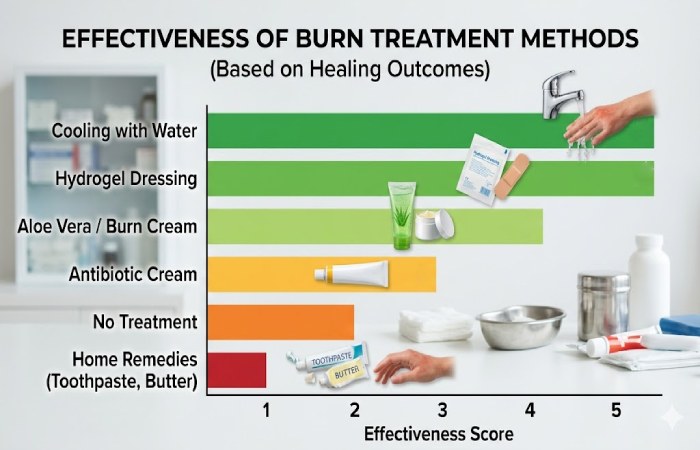
Cooling and moisture-based treatments significantly outperform both no treatment and traditional home remedies, reinforcing that first aid technique matters more than product choice.
For additional information about protecting minor skin injuries, liquid bandages provide another type of topical wound protection.
What to Avoid (Crucial Mistakes)
| Mistake | Why Dangerous |
| Applying cream immediately | Traps heat |
| Using ice | Tissue damage |
| Toothpaste or butter | Infection risk |
| Ignoring blisters | Leads to complications |
| Overusing antibiotics | Resistance and irritation |
Most complications arise from incorrect first aid rather than burn severity itself.
When to Seek Medical Help
| Condition | Action |
| Burn larger than a palm | Immediate medical care |
| Face, hands, feet, genitals | Emergency evaluation |
| Chemical or electrical burns | Urgent treatment |
| Signs of infection | Doctor consultation |
| Third-degree burn | Hospitalization required |
Expert Advice (Evidence-Based)
- Cooling remains the most critical step in reducing burn severity
- Moist wound healing is superior to dry exposure
- Aloe vera shows potential benefits, though product quality varies
- Avoid unnecessary use of strong antimicrobial creams
- Dressings are equally important as creams in recovery
Burn care is shifting toward hydration-focused and protective healing strategies rather than heavy medication.
User Reviews and Experiences
| Product | User Feedback | Insight |
| Burnol | Quick relief for minor burns | Widely trusted in India |
| Silverex | Effective but slow healing | Better for moderate burns |
| Aloe Vera Gel | Soothing and natural | Best for sunburn |
| Neosporin | Good for infection control | Not ideal for long-term use |
| Burnaid | Fast cooling effect | Preferred in emergency kits |
User behavior consistently shows that immediate cooling, combined with a light topical treatment, delivers the best outcomes.
Frequently Asked Questions (FAQ)
- Can I apply burn cream immediately after a burn?
No. Always cool the burn under running water for at least 10–20 minutes before applying any cream. - Which burn cream is best for minor burns?
Aloe vera-based creams are generally the safest and most effective for minor burns. - Is toothpaste good for burns?
No. Toothpaste can irritate and increase the risk of infection. - Can I use ice on a burn?
No. Ice can damage skin tissue and worsen the injury. - When should I stop using burn cream?
Once the skin starts healing and closing, switch to moisturizers and avoid overuse. - Are antibiotic creams necessary for all burns?
No. They should only be used when there is a risk of infection. - What is the fastest way to heal a burn?
Immediate cooling, followed by proper moisture management and protection.
Final Verdict
Burn cream plays a supportive role in healing, but it is not the primary factor that determines recovery outcomes. The most critical step is immediate and proper first aid, especially cooling the burn within the first 20 minutes. For most minor burns, a simple approach involving cooling, gentle cleaning, light application of aloe-based cream, and proper dressing provides the best results. Overuse of medicated creams and reliance on home remedies often do more harm than good. When used correctly and at the right stage, burn creams enhance healing, reduce discomfort, and prevent complications, but they must always be part of a broader, evidence-based burn care approach.
Disclaimer
This content is intended for informational and educational purposes only and does not replace professional medical advice. Always consult a qualified healthcare provider for severe burns, infections, or any uncertain condition.