
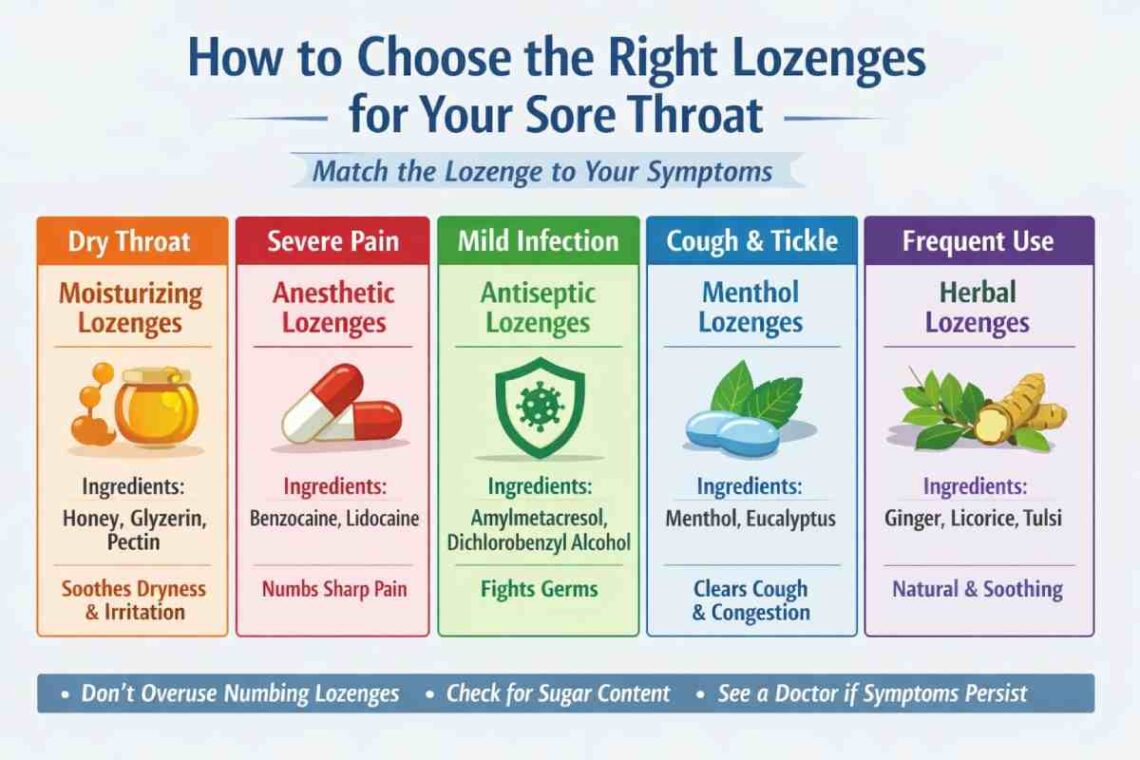
Choosing the right lozenge for a sore throat is not as simple as picking a popular brand. Globally, sore throat lozenges vary significantly in ingredients, effectiveness, price, and intended use case. While most consumers focus on flavor or brand familiarity, the real differentiator lies in understanding how different lozenge types interact with the underlying cause of throat discomfort.
A sore throat can result from viral infections, bacterial infections, allergies, pollution, dehydration, or even prolonged talking. Lozenges are not a cure—but they are one of the most accessible, fast-acting symptom management tools worldwide. According to health authorities such as Mayo Clinic and the NHS, lozenges work primarily by stimulating saliva production and delivering localized soothing or numbing effects, rather than treating root causes directly.
This article belongs to General Health
Why Most People Choose the Wrong Lozenges
Most blogs list “top lozenges” without context. The problem: a sore throat is a symptom, not a diagnosis. Causes vary:
- Viral infection (most common)
- Bacterial infection (e.g., strep)
- Dry air or vocal strain
- Allergies/post-nasal drip
- Acid reflux
The right lozenge doesn’t “cure” your throat—it targets the dominant mechanism (dryness, inflammation, pain, or irritation).
How Lozenges Actually Work
Most lozenges work through three physiological mechanisms:
| Mechanism | Explanation | Outcome |
| Saliva stimulation | Sucking increases saliva flow | Natural throat lubrication |
| Local drug delivery | Active ingredients dissolve slowly | Targeted relief |
| Sensory modulation | Menthol/anesthetics affect nerves | Reduced pain perception |
Health guidance suggests that lozenges can provide relief for 1–2 hours, depending on the formulation.
Identify Your Sore Throat Type
| Symptom Pattern | Likely Cause | What You Need |
| Scratchy, dry, worse in the morning | Dry air/dehydration | Moisturizing (demulcent) |
| Burning, inflamed, painful swallowing | Viral infection | Anti-inflammatory + mild anesthetic |
| Severe pain + fever + swollen glands | Possible bacterial | Medical evaluation + supportive lozenges |
| Tickly throat + cough | Irritation/post-nasal drip | Menthol or herbal soothing |
Understand Lozenge Ingredients
Understanding lozenge categories is the most important step in making the right choice.
| Ingredient Type | Examples | Function | Best For | Found In | Key Insight / Caution |
| Demulcents (Moisture Barrier) | Pectin, glycerin, honey | Coat throat and reduce irritation | Dryness, mild irritation | Strepsils (some variants), herbal lozenges | Underrated: doesn’t numb pain but addresses root dryness effectively |
| Local Anesthetics (Pain Numbing) | Benzocaine, lidocaine | Temporarily numb throat nerves | Sharp pain, painful swallowing | Cepacol | Use cautiously: overuse may mask worsening symptoms |
| Antiseptics (Mild Infection Control) | Dichlorobenzyl alcohol, amylmetacresol | Reduce microbial load | Early-stage infections | Strepsils Original | Supportive only: does not replace antibiotics when required |
| Menthol & Cooling Agents | Menthol, eucalyptus | Cooling sensation + cough suppression | Cough-related irritation | Vicks VapoDrops | Provides quick relief but does not treat the underlying cause |
| Herbal Ingredients | Ginger, licorice, tulsi, eucalyptus | Soothing + mild anti-inflammatory | Frequent use, holistic relief | Herbal lozenges (various brands) | Emerging trend: safer for long-term use with fewer side effects |
Globally, demulcent + antiseptic combinations dominate OTC markets, especially in Europe and Asia, because they balance safety and effectiveness.
Match the Lozenge to Your Use Case
| Situation | Best Choice | Why |
| Office AC dryness | Demulcent lozenges | Continuous moisture barrier |
| Cold/flu sore throat | Anesthetic + antiseptic combo | Pain + mild infection control |
| Public speaking strain | Glycerin-based lozenges | Protect the vocal cords |
| Night-time throat irritation | Honey/herbal lozenges | Gentle, long-lasting soothing |
| Frequent cough | Menthol lozenges | Reduces cough reflex |
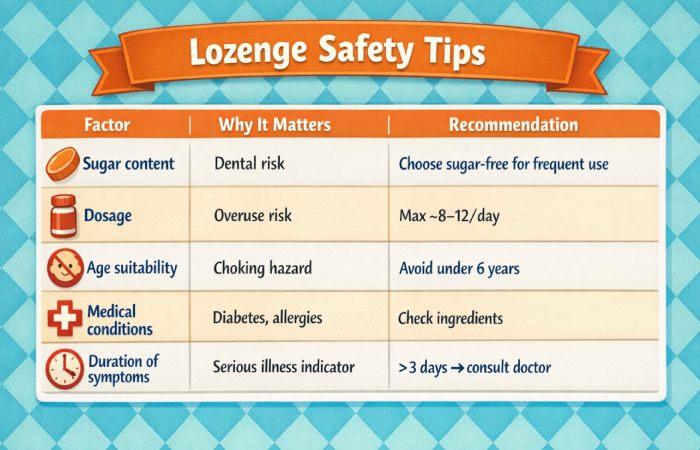
Key Considerations & Safety
Choosing a lozenge isn’t just about effectiveness—it’s about safe and appropriate use.
Price of Lozenges
Lozenge pricing varies based on brand, formulation, and geography.
| Region | Typical Price Range | Example |
| India | ₹20 – ₹100 (small packs) | 8 lozenges ~ ₹24–₹28 |
| India (bulk) | ₹200 – ₹700 | 100+ lozenges ~ ₹248–₹722 |
| USA | $3 – $10 per pack | Cepacol, Halls |
| UK | £2 – £6 | Strepsils variants |
| Global average | $0.05 – $0.20 per lozenge | Varies by brand |
Bulk packs are significantly more cost-effective for frequent users, but may lead to overuse risk.
Where to Buy Lozenges
| Channel | Examples | Advantage |
| Pharmacies | Walgreens, Apollo Pharmacy | Trusted pharmacist’s advice |
| Online Pharmacies | 1mg, Netmeds | Discounts, bulk purchase |
| Supermarkets | Walmart, Tesco | Convenience |
| E-commerce | Amazon, Flipkart | Wide selection |
Online pharmacies often offer better pricing transparency and bulk discounts, especially in India and the US.
Popular Brands and Their Focus
Different brands position themselves differently across global markets.
| Brand | Focus | Key Strength |
| Strepsils | Antiseptic lozenges | Balanced relief |
| Cepacol | Anesthetic | Strong pain relief |
| Halls | Menthol-based | Cough relief |
| Fisherman’s Friend | Strong menthol | Intense cooling |
| Ricola | Herbal | Natural ingredients |
POV:
- Europe → prefers herbal
- US → prefers anesthetic
- Asia → prefers antiseptic blends
Important Health Considerations
| Condition | Lozenges Role | Action Needed |
| Viral sore throat | Effective relief | Self-care sufficient |
| Bacterial infection | Limited role | Medical treatment |
| Acid reflux | Temporary relief | Treat the root cause |
| Allergies | Mild support | Antihistamines needed |
If symptoms include fever, white patches, or severe pain, consider evaluation for Strep throat.
Comparison: Types of Lozenges
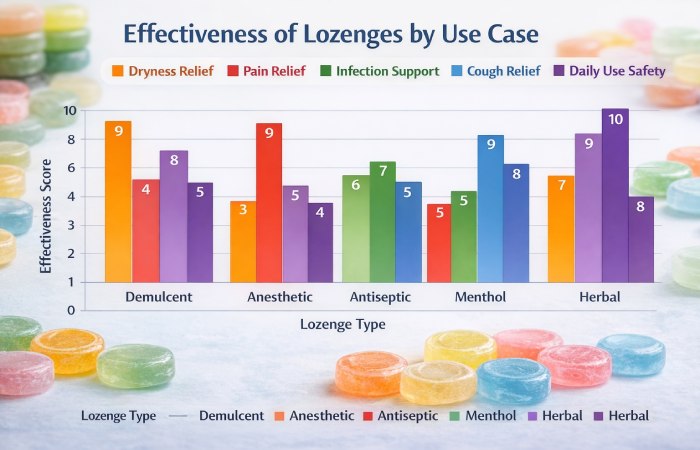
| Feature | Demulcent | Anesthetic | Antiseptic | Menthol | Herbal |
| Pain Relief | Low | High | Medium | Medium | Low |
| Duration | Long | Short | Medium | Medium | Long |
| Safety | High | Moderate | High | High | Very High |
| Daily Use | Yes | Limited | Yes | Yes | Yes |
| Best For | Dry throat | Severe pain | Infection | Cough | Frequent use |
Review Insights
From global user discussions (Reddit & forums):
“Relief is fast, but taste can be strong.”
“Worth it for pain, but not for long-term use.”
Interpretation:
- Strong lozenges = effective but less pleasant
- Herbal lozenges = slower but preferred for frequent use
Common Mistakes
| Mistake | Why It Happens | Impact |
| Choosing the strongest option | Immediate relief bias | Masks symptoms |
| Ignoring cause | Lack of awareness | Ineffective treatment |
| Overuse | Frequent dosing | Side effects |
| Not hydrating | Misconception | Slower recovery |
Advanced Buying Framework
Instead of asking “Which is best?”, ask:
- What’s causing my sore throat?
- Do I need moisture, numbing, or antimicrobial action?
- Will I use it occasionally or frequently?
| Scenario | Best Choice |
| Dry throat | Demulcent |
| Painful infection | Antiseptic + anesthetic |
| Cough irritation | Menthol |
| Daily use | Herbal |
Conclusion
The right lozenge isn’t about brand popularity—it’s about matching the ingredient to your specific throat problem. If your discomfort comes from dryness, demulcent-based options found in products like Strepsils are often more effective than stronger medicated alternatives because they address the root irritation. For sharp pain or difficulty swallowing, anesthetic lozenges such as Cepacol provide fast but temporary relief and should be used sparingly.
When dealing with early-stage infections, antiseptic formulations like Strepsils Original offer supportive benefits, while menthol-based options like Vicks VapoDrops are best suited for cough-related irritation. Ultimately, the smartest approach is not choosing the strongest lozenge, but selecting the one that aligns with your symptoms—prioritizing long-term comfort, safety, and cause-based relief over quick fixes.
FAQs
- Are lozenges safe for daily use?
Yes, but only non-medicated or herbal types are suitable for frequent use.
- Do lozenges cure sore throat?
No. They provide symptomatic relief, not a cure.
- Which lozenge works fastest?
Anesthetic lozenges (e.g., benzocaine-based) provide the fastest relief.
- Can I take lozenges with antibiotics?
Yes, they are commonly used as supportive treatment.
- Are herbal lozenges effective?
Yes, especially for mild symptoms and long-term use.