
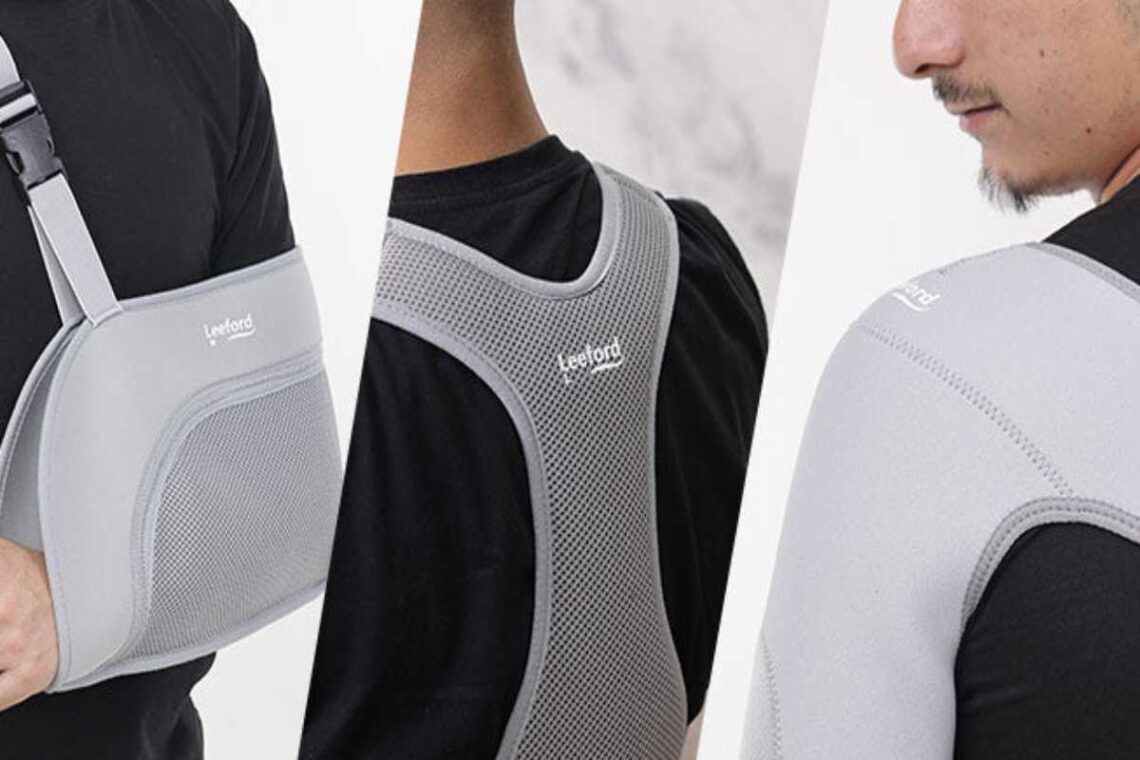
Shoulder brace supports are orthopedic devices designed to provide support, stability, and relief for people with shoulder injuries or conditions. These braces are commonly used in the treatment and rehabilitation of various shoulder conditions, including rotator cuff injuries, dislocations, sprains, strains, and arthritis. By limiting shoulder movement or providing compression, shoulder braces help to alleviate pain, promote healing, and prevent further injury. Shoulder braces come in a variety of designs and materials, tailored to meet the specific needs of different injuries and levels of activity.
What Is a Shoulder Brace Support?
A shoulder brace support is an orthopedic device designed to stabilize, compress, or immobilize the shoulder joint. Its primary functions are to restrict movement to allow for healing, provide pain relief through compression, and support the complex network of muscles, ligaments, and tendons surrounding the joint . The shoulder’s complexity, involving the acromioclavicular (AC) joint and the rotator cuff, makes it susceptible to various injuries, and a brace helps manage these conditions by promoting rest and reducing strain .
Worldwide History of Shoulder Brace Supports
The concept of the “shoulder brace” has evolved significantly. In the late 19th and early 20th centuries, the term was commonly associated with posture correction. Catalogs from this era, such as the 1901 Eaton’s ad in Canada, featured “Shoulder Brace and Hose Supporters Combined,” which were undergarments intended to pull the shoulders back for better posture . These early devices were as much about fashion and social norms as they were about health.
The modern understanding of a shoulder brace as a medical device for injury and surgery recovery developed throughout the 20th century alongside advances in orthopedic medicine. Today, the market has shifted toward evidence-based, specialized devices for specific injuries . The global market for shoulder braces reflects this evolution, valued at nearly US$ 1.3 billion in 2024 and projected to grow to US$ 1.86 billion by 2031, driven by an aging population and increased sports participation .
Types of Shoulder Brace Supports
Selecting the right brace depends entirely on the specific condition and the level of support required.
| Type of Brace | Primary Function | Common Uses | Key Features |
| Immobilizers / Post-Op Braces | Complete restriction of movement to protect surgical repairs or acute injuries. | Rotator cuff repair, fracture, dislocation | Rigid structure, often with an abduction pillow to hold the arm at an angle . |
| Stabilizers / Support Braces | Provide support and compression while allowing a range of motion. | Shoulder instability, strains, tendonitis, arthritis | Compression sleeves with adjustable straps; used during activity or daily life . |
| Posture Correctors | Retract the shoulders to improve alignment and reduce strain. | Poor posture, text neck, minor shoulder tension | Figure-8 or harness design that gently pulls the shoulders back. |
| Neurological Supports | Support the arm and protect the shoulder joint in cases of muscle weakness or paralysis. | Hemiplegia (post-stroke), shoulder subluxation | Specialized designs to support the arm’s weight and keep the joint aligned . |
Shoulder Brace Specifications and Key Features
Modern shoulder braces incorporate various features to enhance comfort, compliance, and effectiveness.
| Feature | Description | Benefit |
| Material | Neoprene, elastic, breathable knit fabrics (e.g., Air Mesh™), or high-density foam . | Provides warmth, compression, comfort, and moisture management. Neoprene is durable, while newer knits offer breathability . |
| Immobilization Level | Achieved through rigid stays, abduction pillows (10° or 15°), or adjustable straps . | Protects surgical sites (e.g., rotator cuff repair) by preventing re-injury . |
| Adjustability | Multi-point strapping systems (e.g., 3-way adjustable), Velcro closures, and buckles . | Allows for a customized, secure fit for different body types and levels of support. |
| Dynamic Technology | Advanced materials like RHEON™ that react to movement to provide adaptive resistance . | Offers stability during activity without restricting natural motion, ideal for athletes . |
| Comfort & Compliance | Breathable fabrics, soft edges, lightweight design, and neck protection sleeves . | Encourages patients to wear the brace as prescribed, which is crucial for healing. |
Shoulder Brace Supports Prices
The cost of a shoulder brace can vary widely based on its complexity, brand, and materials.
| Price Range | Typical Products | Key Features |
| Basic ($15 – $40) | Simple elastic supports, basic posture correctors, entry-level compression sleeves. | Fundamental compression, limited adjustability. Often found in pharmacies. |
| Mid-Range ($40 – $100) | Quality stabilizers from brands like McDavid or Mueller, some post-op slings . | Better materials, more adjustability, good for sports and moderate support. |
| Premium ($100 – $300+) | Advanced post-op braces (e.g., Breg T-Shell, Omo-Hit), high-tech athletic braces (e.g., EVS SB03), and braces from top-tier brands like Bauerfeind . | Specialized designs for specific injuries, advanced materials, maximum durability and support. |
Where to Buy Shoulder Brace Supports
| Vendor Type | Examples | Advantages | Disadvantages |
| Pharmacies/Drugstores | Local CVS, Walgreens, Boots. | Immediate access, can see the product. | Limited selection, may not have specialized sizes. |
| Medical Supply Stores | Dunbar Medical, Ortho Europe . | Expert advice, wider range of clinical-grade products. | Can be more expensive than online. |
| Online Marketplaces | Amazon, eBay. | Vast selection, competitive pricing, convenient. | Risk of counterfeit products, no professional fitting. |
| Specialty & Sports Retailers | Decathlon, EVS Sports . | Good for sports-specific braces and supports. | Focus is on athletic, not necessarily post-surgical, supports. |
| Direct from Brands | Bauerfeind, Sporlastic . | Access to full product line, authenticity guaranteed. | May not have the broadest selection of other brands. |
Best Shoulder Brace Brands Comparison
Several manufacturers are recognized as leaders in the shoulder brace market .
| Brand | Known For | Specialization |
| Bauerfeind | German-engineered, high-quality medical supports. | Premium compression and support for both medical and athletic use. |
| McDavid | Sports medicine and protective gear. | Durable braces for active recovery and injury prevention during sports . |
| Breg / Ossur | Advanced orthopedic products for post-operative care. | High-tech, often rigid, braces for immobilization and post-surgical recovery . |
| Sporlastic | Specialized orthopedic solutions. | Innovative designs for neurological support (Neuro Lux II) and post-op recovery (Omo-Hit) . |
| Mueller / LP Support | Widely available, reliable, and affordable braces. | Basic to intermediate supports for common injuries . |
| EVS Sports | High-performance sports braces. | Braces with dynamic technology (RHEON™) for athletes needing stability and mobility . |
Shoulder Brace vs. Shoulder Wrap vs. Shoulder Immobilizer
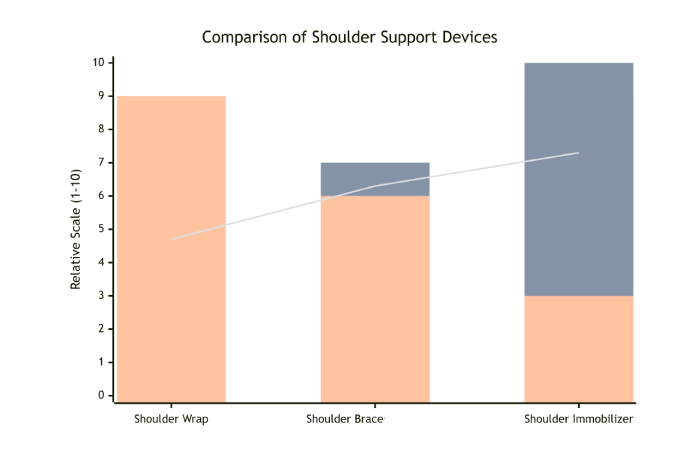
| Feature | Shoulder Wrap | Shoulder Brace (Stabilizer) | Shoulder Immobilizer |
| Primary Function | Compression & Warmth: Provides consistent pressure to the soft tissues. | Dynamic Support & Stabilization: Allows movement but limits harmful ranges of motion. | Complete Restriction: Prevents all movement to protect a surgical repair or acute injury. |
| Typical Design | A simple, sleeve-like elastic or neoprene garment that slips over the shoulder and arm. | A more complex system involving a compression sleeve with adjustable straps (anterior/posterior). May include padding. | A rigid or semi-rigid structure, usually consisting of a waist belt, arm sling, and abduction pillow (wedge) to hold the arm away from the body. |
| Level of Restriction | Minimal (0-5%). Does not restrict motion; merely compresses. | Moderate (20-70%). Can be adjusted to allow a safe range of motion (ROM) while blocking extreme or harmful positions (e.g., excessive reaching). | High (90-100%). The patient cannot lift the arm or rotate the shoulder. |
| Key Indications | Mild tendonitis, bursitis, general muscle ache, minor arthritis flare-ups. | Shoulder instability (partial dislocation), post-dislocation rehab, rotator cuff tendinopathy, athletic support during return-to-play. | Post-operative recovery (rotator cuff repair, labral repair), fractures (proximal humerus), acute dislocations. |
| Usage Context | Daily comfort, mild pain relief, pre-activity warming, post-activity recovery. | Rehabilitative & Preventative: Used during physical therapy or light daily activity to provide confidence and safety. | Post-Surgical / Acute Phase: Worn constantly (except for hygiene) for the first several weeks after injury/surgery. |
| Example Scenario | A weightlifter with mild shoulder ache wears a wrap to keep the joint warm between sets. | A person with a history of dislocation wears a brace with straps to play volleyball, preventing their arm from going into a dangerous “cocked” position. | A patient who just had rotator cuff surgery wears an immobilizer with an abduction pillow for 6 weeks to allow the tendon to reattach to the bone. |
Common Shoulder Injuries and Conditions in which shoulder brace supports use
Shoulder braces are utilized for a wide range of conditions :
- Rotator Cuff Injuries: Tendinitis, bursitis, or tears (post-surgery or conservative management).
- Fractures: Of the upper arm (humerus) or collarbone (clavicle).
- Dislocation/Instability: When the shoulder joint is loose and prone to slipping out.
- Shoulder Separation: Injury to the AC joint.
- Frozen Shoulder (Adhesive Capsulitis): To provide gentle stretch and support.
- Arthritis: To provide compression and pain relief.
- Post-Surgical Recovery: After rotator cuff repair, labrum surgery, etc. .
- Neurological Conditions: Such as post-stroke shoulder subluxation .
Alternatives Devices to Shoulder Brace Supports
Depending on the condition, a doctor might recommend alternatives to a brace.
| Alternative Device | Description | When It’s Used |
| Simple Arm Sling | A fabric sling that supports the weight of the arm. | For fractures, dislocations, or post-op protection when full immobilization isn’t needed . |
| Kinesiology Tape | Elastic tape applied to the skin to support muscles and joints without restricting movement. | For pain relief, reducing swelling, and facilitating muscle function in minor injuries. |
| Compression Sleeve | A snug, sleeve-like garment providing basic compression. | For minor pain, swelling, or proprioceptive feedback during activity. |
How to Choose the Right Support Brace
- Get a Professional Diagnosis: Consult a doctor or physical therapist. The specific injury dictates the type of brace you need .
- Determine the Needed Function: Do you need complete immobilization (post-surgery), stabilization (for sports), or pain relief (for arthritis)? .
- Prioritize Fit and Comfort: A brace that doesn’t fit will not be effective. Follow sizing guides carefully (e.g., measuring from elbow to fist) . Look for breathable materials.
- Consider Your Lifestyle: If you’re an athlete, look for dynamic, low-profile braces. If you need it for daily work, ensure it can be worn comfortably under clothing .
- Consult a Professional for the Final Choice: A healthcare professional can help you weigh the pros and cons of different brands and models based on your specific needs and the latest evidence .
Is Shoulder Brace Support used for gym
Yes, but with important distinctions. Shoulder braces are used in the gym for two main reasons: prevention and recovery. You should never wear a post-surgical immobilizer while working out. Gym braces are specifically designed to allow movement while providing support.
| Scenario | Type of Brace Used | Purpose |
| During Workouts (Prevention/Performance) | Sports stabilizers, compression sleeves, dynamic braces (e.g., EVS SB03, McDavid) . | To provide stability during heavy lifts (bench press, overhead press), prevent re-injury, and improve proprioception without restricting necessary range of motion. |
| Post-Workout (Recovery) | Basic compression supports. | To aid in recovery by promoting blood flow and reducing minor swelling after a workout. |
| Returning from Injury | Stabilizers or immobilizers (initially). | To protect a healing injury while beginning to introduce light activity, as directed by a physiotherapist. |
Doctors, Treatment and their Fees
Shoulder pain is typically managed by a team of professionals. Fees vary significantly based on location, specialist, and insurance.
| Professional | Role | Typical Consultation/Fee Range |
| General Practitioner (GP) | Initial diagnosis, prescription for imaging, referral to a specialist. | Varies by country/insurance; often a standard office visit copay. |
| Orthopedic Specialist | Diagnoses complex injuries, performs surgeries, prescribes advanced bracing. | Can range from $150 to $500+ for a consultation without insurance. |
| Physical Therapist | Designs rehab programs, recommends appropriate bracing for activity, teaches proper use. | $75 to $350+ per session, depending on location and therapist expertise. |
Doctors view on Shoulder Brace Support
The medical view on shoulder bracing is nuanced and increasingly evidence-based.
- For Acute Injury & Post-Op: Doctors agree that bracing is crucial for protecting surgical repairs and acute injuries like fractures during the initial healing phase .
- Shift in Protocol: There is a growing debate on the necessity of complex abduction braces for all patients. Recent research, including a 2025 editorial in Arthroscopy, suggests that for standard rotator cuff repairs, a simple sling may be just as effective as an abduction brace, with the added benefits of being cheaper and more comfortable for the patient .
- Emphasis on Compliance: Doctors consistently emphasize that a brace only works if it’s worn. Therefore, they often prioritize patient comfort and ease of use when making a recommendation .
- Support for Specific Needs: For specific conditions like neurological shoulder subluxation or shoulder instability in athletes, specialized braces are highly recommended .20
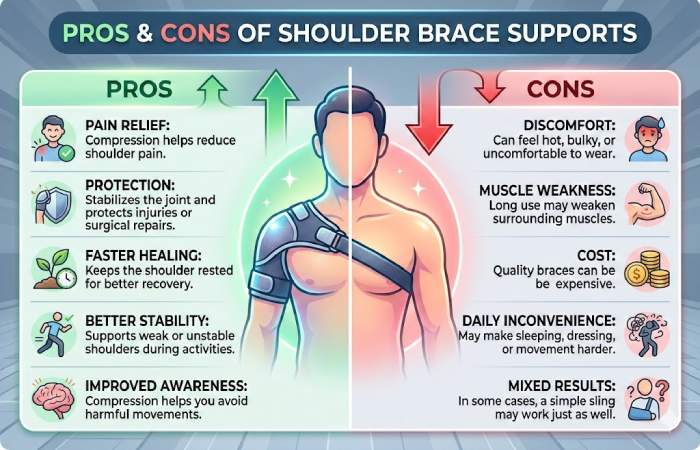
Pros and Cons of Shoulder Brace Supports
Reviews and User Experiences
Based on common feedback from online retailers and forums, user experiences tend to follow these patterns:
- Positive: Users of sports stabilizers like the McDavid or Shock Doctor often praise their ability to provide confidence and support during activities without being too restrictive . Post-surgery patients frequently credit braces like the Breg T-Shell for making them feel “secure” and protected after an operation . Users of basic supports like the Healivo appreciate the gentle compression for minor aches and the ease of putting it on .
- Negative: Common complaints about post-op braces include difficulty sleeping, the brace being hot and bulky, and skin irritation . Some users of less expensive braces report issues with straps slipping or the material not being durable. There is also a recurring sentiment that wearing any brace is a “necessary evil” for recovery.
Final Verdict: Are Shoulder Brace Supports Worth It?
Yes, when used correctly and for the right reasons. Shoulder brace supports are invaluable tools in modern orthopedics. They provide essential protection after surgery, offer stability for athletes, and can alleviate pain for those with chronic conditions.
However, they are not a magic bullet. Their effectiveness depends entirely on proper diagnosis, correct selection of the brace type, and a good fit. The decision to use one, and which one to use, should always be made in consultation with a healthcare professional. As medical research evolves, it’s also important to have an open conversation with your doctor about the latest evidence—sometimes, a simple solution like a basic sling may be just as effective as a high-tech, expensive brace . For the right patient at the right time, a shoulder brace is not just worth it; it is a critical component of a successful recovery.
FAQs About Shoulder Brace Supports
Can I sleep with a shoulder brace on?
It is often recommended to sleep with the brace on to protect the injury, but you should consult your healthcare professional. If the brace is too uncomfortable, you can try sleeping in a semi-seated position with pillows or on your non-injured side to avoid rolling onto the injury .
How long should I wear a shoulder brace?
The duration varies greatly depending on the injury. For a mild sprain, it might be a few weeks. For a dislocation or post-surgery, it could be 12-16 weeks or more. Always follow the specific guidance of your doctor or physical therapist .
Can a shoulder brace cure my shoulder pain?
A brace is a tool for management, not a cure. It works by stabilizing the joint, allowing tissues to rest, and reducing pain. It creates the right environment for healing, but the actual healing process is carried out by your body, often in conjunction with physical therapy .
Is a shoulder brace the same as a sling?
No, though they are related. A sling primarily supports the weight of the arm. A shoulder brace is designed to actively stabilize or immobilize the shoulder joint itself. Some post-op braces incorporate a sling as part of a larger, more restrictive system .